How to Create a Creepy Doll Makeup Look for a Horror Cosplay

Key Takeaways
- A pale, matte porcelain base.
- 3D cracks created using collodion.
- A thrifted, subtly distressed dress.
- Stiff, doll-like movements prioritized over gory effects.
How to Create a Believable Porcelain Complexion
For the cracks to be truly terrifying, the initial perfection must be flawless. Creating this immaculate base requires a specific technical rigor.
The Foundational Elements of the Illusion
The character's credibility requires bringing together three indispensable pillars, along with two complementary details to perfect the look:
The 3 Structural Pillars:
- A matte, very pale foundation, which must be chosen several shades lighter than your natural skin tone.
- A firmly structured dress, embellished with lace trim, puff sleeves, or a full skirt.
- A wig or natural hair that is tightly curled and meticulously pinned in place.
- Artificially enlarged eyes, heavily accentuated with dramatic false eyelashes.
- Blush applied in strict, distinct circles, placed very high on the cheekbones.
The Cosplayer's Strategic Investment
When managing your materials, one strict rule applies: you absolutely must not skimp on the foundation or the dress. Using a cheap or unstable cosmetic base instantly ruins the painted-surface illusion upon which the entire architecture of the look depends. Conversely, if this bodily and sartorial canvas is solid, small accessories, ribbons, and various props can easily be sourced on a tight budget without compromising the final quality of the character.
Creating 3D Makeup Cracks
Once the porcelain canvas is sealed, the artificial degradation phase begins. This is where the aesthetic shifts toward the uncanny, utilizing chiaroscuro techniques and topographical modifications of the skin.
The Two-Dimensional Trompe-L'Oeil
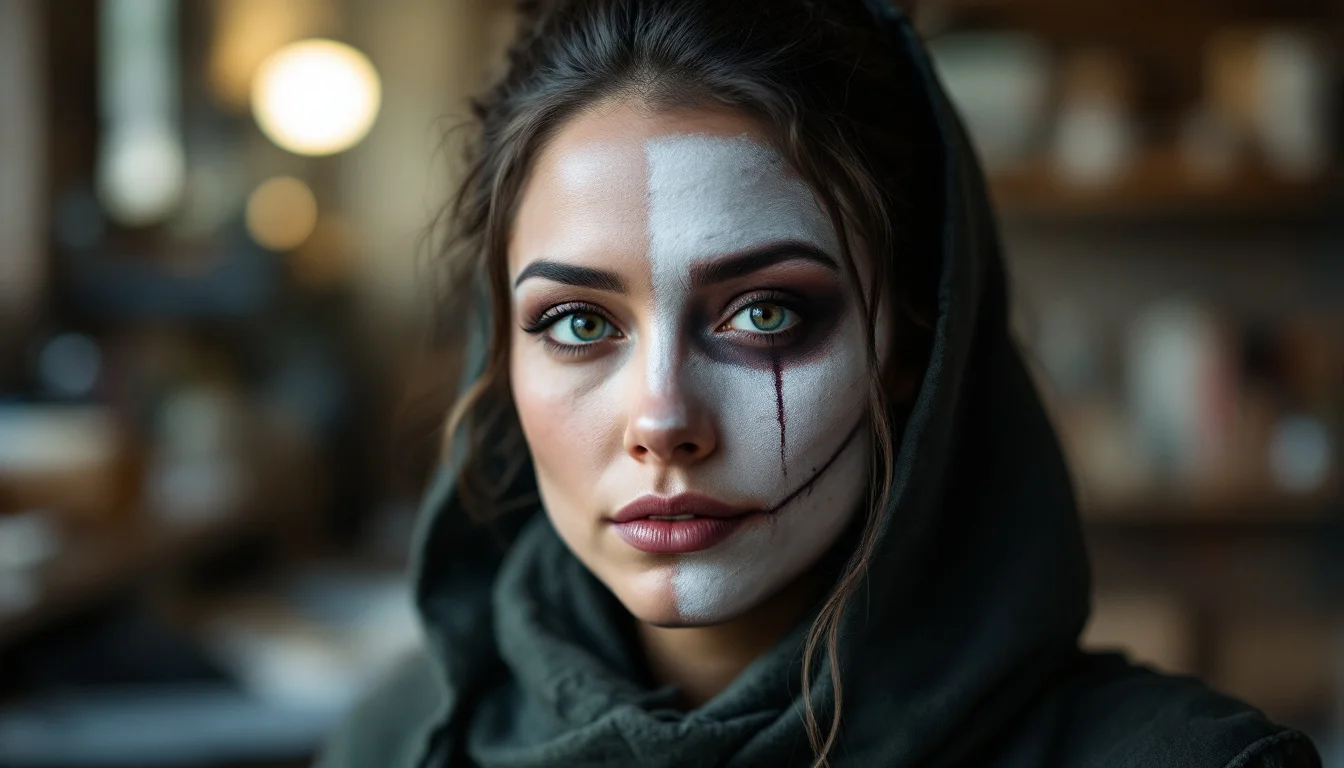
For the classic method, the "broken doll" effect is achieved by drawing fine, irregular lines radiating from a central fracture point—ideally located near the eye or on the cheek. This linework is executed with precision using black and gray makeup. The crucial trick is to then shade only one side of each crack; this lighting asymmetry artificially creates depth on a flat surface.
Transitioning to 3D Effects
However, to achieve a texture that flat makeup physically cannot produce, advanced makeup artists turn to special effects products. Liquid latex or flexible collodion is applied directly to the skin before any painting begins.
Safety note: Always perform a patch test on your forearm before using collodion or latex; avoid the eye area, mucous membranes, and broken skin. Only use products formulated for cosmetic special effects use on the skin, and remove the product with an appropriate solvent recommended by the manufacturer.
The room's lighting catches the edges differently, creating genuine depth at the core of each crack. On this textured base, gray, black, and white pigments are then layered to achieve a realistic fracture, thereby avoiding the "cartoon" finish of simple line-drawn makeup.
The Clinical Subtlety of Dysfunction
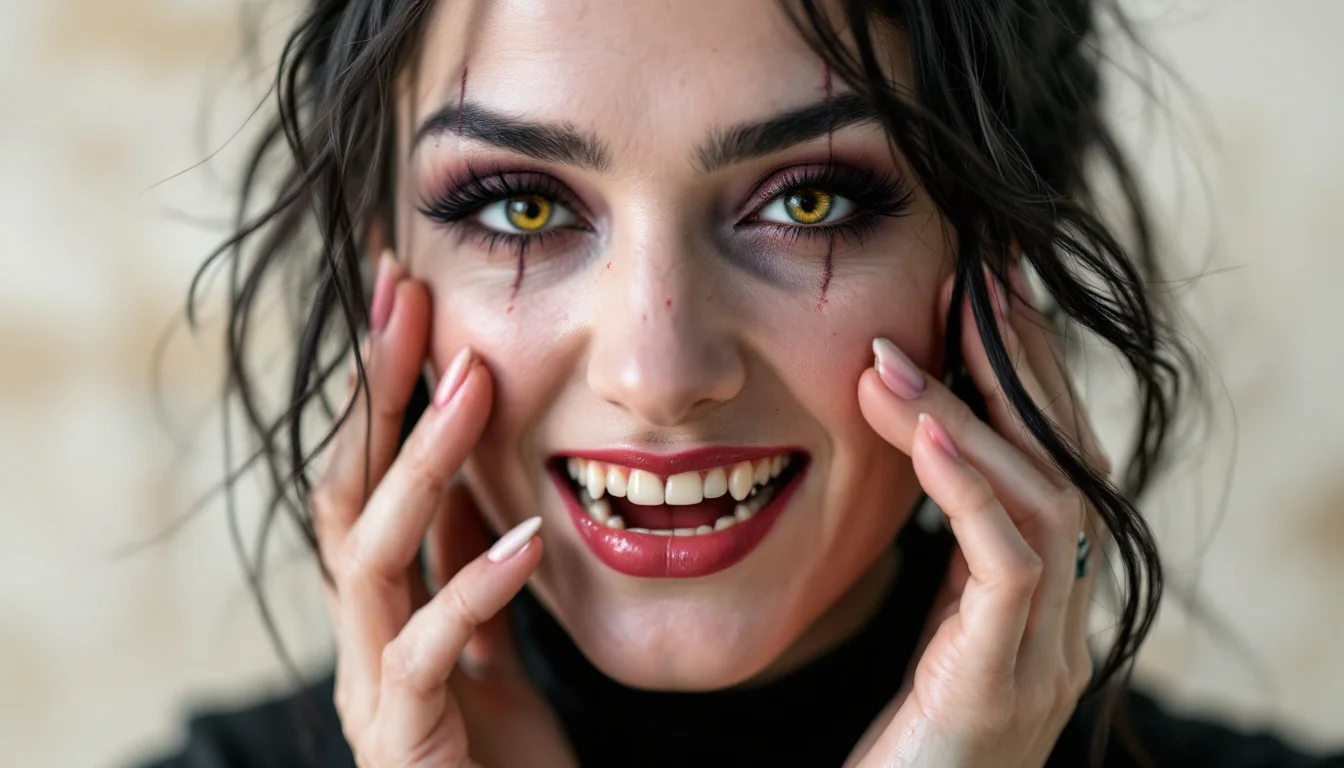
The psychological unease generated by the makeup doesn't stem from excess, but from the surgical alteration of familiar details. The most effective touches include tiny bloodshot veins drawn near the eyes, a single carefully painted tear track, or a deliberately asymmetrical placement of eyelashes. These subtle signals of "dysfunction" prove far more unsettling to the observer than the obvious addition of gore. In this aesthetic register, subtlety always trumps fake blood.
How to Alter a Thrifted Dress for Cosplay
The work on the garment extends the story told by the face. Today, designing this costume is rooted in a much broader reality of consumption than simply prepping for a convention.
The Secondhand Alternative
According to our estimates, a successful DIY porcelain doll costume can easily stay under the 40-euro mark by embracing a secondhand approach (including a thrifted lace dress, a petticoat, white tights, Mary Jane shoes, and a hair bow)—provided, of course, that the makeup base is technically solid.
This upcycling approach echoes the massive environmental impact of the fashion industry. The destruction of unsold goods (including textiles) in Europe generates around 5.6 million tons of CO₂ emissions each year, equivalent to 1 million gas-powered cars. Although opting for a used dress is constrained by the availability of sizes in thrift stores, and the footprint of a single costume remains marginal, thrifting and altering a garment becomes a compelling creative avenue.
Textile Alteration Techniques
Weathering a thrifted dress is not a random process; it is executed with just as much precision as the makeup. You need to create frayed edges on the skirt hem, add strategic ash or dirt stains, or perhaps envision a partially detached sleeve or a missing row of buttons. Integrating mismatched accessories, such as wearing a single glove or keeping just one braid intact, instantly amplifies the horror effect.
How to Embody the Doll Character
Finalizing the look requires paying special attention to your hair's structure and your physical presentation.
Hair Architecture
The treatment of the hair must immediately evoke the rigidity of a manufactured material. Hair styles that instantly "read" as doll-like to an audience include tight ringlet curls, high symmetrical pigtails, or a firmly structured bun with ribbons. Using a high-quality wig often proves essential, as it will hold its shape all night and prevent the hairstyle from gradually collapsing during an event—which would shatter the illusion of an unalterable, synthetic material.
The Physical Performance
The makeup and clothing are merely the character's shell. The most memorable porcelain doll costumes always suggest a specific backstory: an abandoned doll in an attic, perhaps, or a cursed toy. The best acting tip is to choose a singular gesture and stick to it with absolute rigor—whether that's keeping your head perpetually tilted to one side, holding an excessively unblinking stare, or offering a mechanical, jerky wave. It is this repetitive physical quirk that transforms a simple (albeit beautiful) handcrafted costume into a truly memorable performance.
Can This Makeup Be Adapted for Non-Horror Events?
Absolutely. The "sweet" version of the doll—characterized by pastel tones, soft curls, oversized artificial eyes, and absolutely no damage or cracks—is perfectly suited for group themes, family-friendly events like carnivals, and costume contests where overall visual cohesion matters most. The goal here is to focus on pure aesthetics and color harmony. Conversely, the collodion-heavy "broken doll" iteration clearly belongs at adult Halloween parties, where the character's dramatic and horrific commitment is fully appreciated and expected by the audience.