Vampire Fangs: How to Make and Attach Them Safely
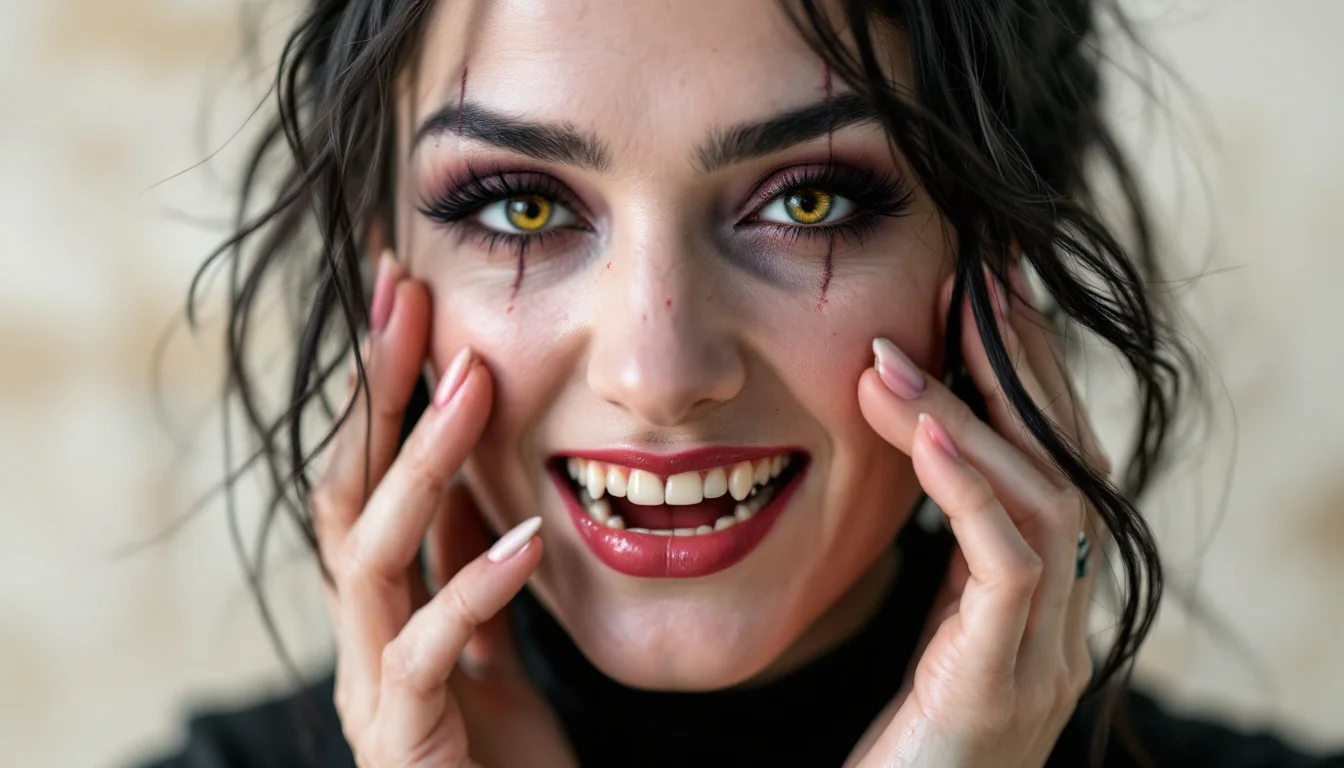
The quest for the perfect cosplay can sometimes turn into a genuine dental emergency. Recently, a TikTok video by user Whitney Kait (@muawk) detailing her struggle to remove fake fangs attached with nail glue surpassed 10 million views. The video also sparked over 6,000 comments. This viral footage perfectly illustrates the dangers of certain social media hacks, where instant aesthetics take precedence over the integrity of tooth enamel.
Given the prevalence of hacks promoting unsuitable adhesives, crafting fangs requires strict adherence to a hierarchy of materials. The world of special effects (SFX) and professional makeup has its own set of rules to ensure both striking results and absolute safety. According to the Cinema Makeup School, there are four main types of fangs: the classic fang (long, sharp upper canines, Dracula-style), the subtle or short fang (slightly elongated canines for modern, romantic vampires), the extreme or monstrous fang (oversized, jagged, sometimes including bottom teeth), and custom-made dental acrylic prosthetic sets.
Whether you are preparing for a brief photoshoot, a long day roaming a convention floor, or aiming for a movie-set-quality result, each scenario calls for a specific technique. This guide explores the most reliable crafting and application methods for creative enthusiasts.
Key takeaways:
- Nail glue and Superglue are incredibly dangerous for your enamel.
- Orthodontic wax is only suitable for photoshoots (short-term wear).
- Thermoplastic is recommended for long-term wear at conventions.
- Custom acrylic prosthetics cast from molds are the gold standard for advanced SFX.
- If you accidentally glue fangs to your teeth, contact a dentist immediately.
What to Do If Fangs Are Attached with Nail Glue
The craze for temporary body modifications sometimes pushes creators to use household products directly on their bodies. Resorting to cosmetic adhesives not intended for oral use poses a major risk of permanently damaging your teeth.
Dr. Zainab Mackie explicitly warns against nail glue: it is toxic and will not easily come off your teeth. Experts also caution against Superglue, which presents an extreme danger and is strictly prohibited.
In the event of a mishap with these types of products, medical advice is uncompromising. You should contact a dentist for safe removal and exercise extreme caution while waiting for the fake fangs to fall off on their own. Attempting to rip the prosthetics off yourself could fracture your natural tooth or damage its protective layer.
| Adhesive | Enamel Safety | Hold | Recommendation |
|---|---|---|---|
| Orthodontic wax | Complete | Very weak (photoshoots) | Safe but temporary alternative |
| Denture adhesive | Complete | Moderate | Recommended for attaching acrylic fake nails |
| Nail glue | Extreme danger | Permanent | Strictly prohibited |
| Superglue | Extreme danger | Permanent (toxic) | Strictly prohibited |
Denture adhesive is safe and easy to remove: it is the recommended alternative if you are using fake acrylic nails as fangs. These adhesive pastes are formulated to react with saliva and dissolve upon brushing, offering a great compromise for cosplayers.
How to Apply Vampire Fangs Without Glue: The Wax Misunderstanding
In the realm of makeup tutorials, the term "wax" can often cause confusion among beginners. Depending on the context—medical or artistic—this word refers to materials with entirely opposite physical properties, leading to numerous application errors.
Orthodontic wax provides an alternative to gluing fangs: it doesn't hold for long but works perfectly well for photoshoots. Typically given to brace-wearers to prevent mouth ulcers, this wax acts as an inert adhesive paste. It is pressed between the tooth and the fake fang to create a slight suction. However, it softens with body heat and offers a weak hold. It can easily detach while eating or speaking, though it usually won't be swallowed.
Conversely, the special effects approach uses the term to describe a purely creative medium. When crafting prosthetics, this wax is applied to the dental cast rather than the wearer's actual tooth.
This sculpting wax (or makeup wax) is designed to be modeled with heated spatulas to create the fang prototype. It has zero adhesive properties and is never placed directly into the cosplayer's mouth. Confusing these two materials means either trying to glue prosthetics with a slippery substance or attempting to sculpt teeth with a soft, collapsing gel.
Thermoplastic or Acrylic: Which Method Should Beginners Choose?
For cosplayers looking for a reliable, comfortable solution that can last an entire day at a convention without requiring separate adhesive, heat-formable polymers are frequently the go-to choice. Professional tutorials often emphasize that you don't need to spend hundreds of dollars on custom dental prosthetics to achieve convincing vampire fangs. The thermoplastic method is widely considered beginner-friendly.
Recommended "beginner" supplies include white polymer clay or thermoplastic beads (such as InstaMorph or Friendly Plastic), a small cup of hot water to mold the thermoplastic, and nail glue (the latter is sometimes mentioned online as an option for a temporary hold, although dentists strictly prohibit it for health reasons).
Transforming the Material
The thermoplastic method relies on a reversible physical reaction. The beads are submerged in hot water until they become soft and transparent, then rolled into a small cone that is applied to the canine and pressed to match your bite. This state change is highly visual: the plastic goes from a hard solid to a perfectly malleable, crystalline gel.Molding on the Tooth
Once the cone is in place, the softened material must be pushed toward the base of your natural tooth and wrapped around the back to create a small track. It is this gripping effect, molded to the exact anatomy of your canine, that holds the fang in place through simple mechanical friction—no glue required. The wearer should gently close their jaw to ensure the fake fang doesn't interfere with their natural bite.Finishing Touches and Room for Error
After shaping, the tip of the thermoplastic fang can be pinched to a point with your fingers and trimmed with small scissors. The piece is then removed and left to cool and harden. The beauty of this material lies in its forgiving nature: the piece can be reheated and remolded as many times as needed. If the final shape is too blunt or the track grips too tightly, simply running it under hot water lets you start the adjustment process all over again.Advanced SFX Tutorial: The Engineering of Custom Acrylic Prosthetics
When absolute realism is demanded—especially for video close-ups or a cosplay contest—DIY methods show their limits. In these cases, you must replicate the production pipeline of professional special effects labs.
Impressions and Positive Casting
The professional method begins with taking an alginate impression of the teeth (a material commonly used in dentistry), then pouring dental stone into the mold to create a solid cast of the mouth. The alginate sets in the mouth in just a few minutes, capturing every minute detail of the enamel and gums. The hardened plaster cast (the dental stone) then becomes an exact replica of the cosplayer's jaw, allowing for workshop modifications without any medical risk.Sculpting the Prototype
The artistic phase begins on this inert replica. The fangs are sculpted in wax or clay directly onto the dental stone cast. The sculptor uses tiny metal tools to sharpen the tip, create natural enamel striations, and ensure the prosthetic seamlessly blends into the existing gum line.The Final Cast
Finally, the sculpt serves as the base for a final cast made of dental acrylic, a durable, lightweight, and safe material. Once cured, this rigid acrylic is sanded and polished to eliminate any sharp edges. Polishing is an absolute must: a poorly smoothed fang risks lacerating the lower lip or the inside of the cheeks every time the wearer speaks.Chromatic Tooth Details
Crafting the fang is only the first half of the aesthetic process. A flawlessly pure white tooth will always look fake, as natural human enamel features yellow, gray, or ivory undertones.
If the finished fang looks too white or excessively shiny, makeup artists recommend a light wash of professional tooth paint or mouth-safe enamel to better match your actual shade. These varnishes, formulated specifically for oral use, allow you to add a subtle yellowish patina near the root of the fake fang, blending the transition between your real canine and the acrylic or thermoplastic extension.
Conclusion
Today's cosplay special effects greatly benefit from a wide variety of polymers and acrylics. This democratization of materials makes high-level realism accessible, but it demands strict technical discipline in return. The boundary between surface makeup and dental health must never be crossed by using improper adhesives. Shifting amateur practices toward safe, proven protocols ensures that transforming into a creature of the night remains a fun artistic performance, rather than an irreversible mistake.
--- The information provided in this article does not replace medical advice. Consult your doctor or a qualified healthcare professional.