Convention Cosplay: Security and Consent
The Practical Framework of Cosplay
Spending hours sewing, sculpting high-density foam, and perfecting intricate makeup: costume creation is a labor of love. As crafting and performance enthusiasts, we often view conventions as the ultimate playground to showcase our creations. Yet, beneath the illusion of total creative freedom, our hobby operates within a strict set of rules.
Stepping onto the floor of a major event or taking the stage instantly turns a cosplayer into a participant bound by specific organizational requirements. At the events we reviewed, cosplay is governed by a clear set of written rules. From bag checks at the entrance and luggage policies to photography passes and guidelines on nudity, numerous aspects are strictly regulated to protect both the public and the performers.
What Are the Key Takeaways?
Before finalizing your next costume for the stage or the convention floor, here are some commonly enforced rules to keep in mind:
- Spatial Awareness and Safety: Bulky armor and oversized luggage are subject to removal policies to prevent blocking emergency exits.
- Nudity Guidelines: Full bodypaint and highly revealing outfits must adhere to clear modesty limits, requiring intimate areas to be properly covered.
- Consent: Content warnings for stage performances and official passes to regulate photographers are frequently required.
- What This Means for You: Logistical constraints often translate to mandatory paid coat checks for luggage, submitting content warnings in advance, or stage media adhering to strict rules (such as pre-edited audio/video and a 2-minute time limit for certain competitions).
How Do Events Compare in Their Rules?
To better understand how various events manage costumed crowds, it is helpful to compare their specific guidelines. Each organizer emphasizes different priorities.
| Event | Access Policy and Searches | Photography Regulations | Logistics Management |
|---|---|---|---|
| Easyfairs Belgium Venues | Possible denial of entry, pat-downs, and bag checks. | Not disclosed. No specific procedure detailed. | Objects obstructing walkways may be removed. |
| Manga & Cosplay Hasselt | Specific access (free entry contingent on wearing a costume). | Photo pass mandatory. | Not disclosed. Luggage management is not specified. |
| Y/CON (France) | Strict content and audience age verification (may vary by edition). | Prior permission required for any photography. | Free changing rooms available. Mandatory paid cloakroom for storage. |
These varying approaches demonstrate that wearing a costume does not exempt any attendee from general venue rules.
How Are Physical Space and Security Managed?
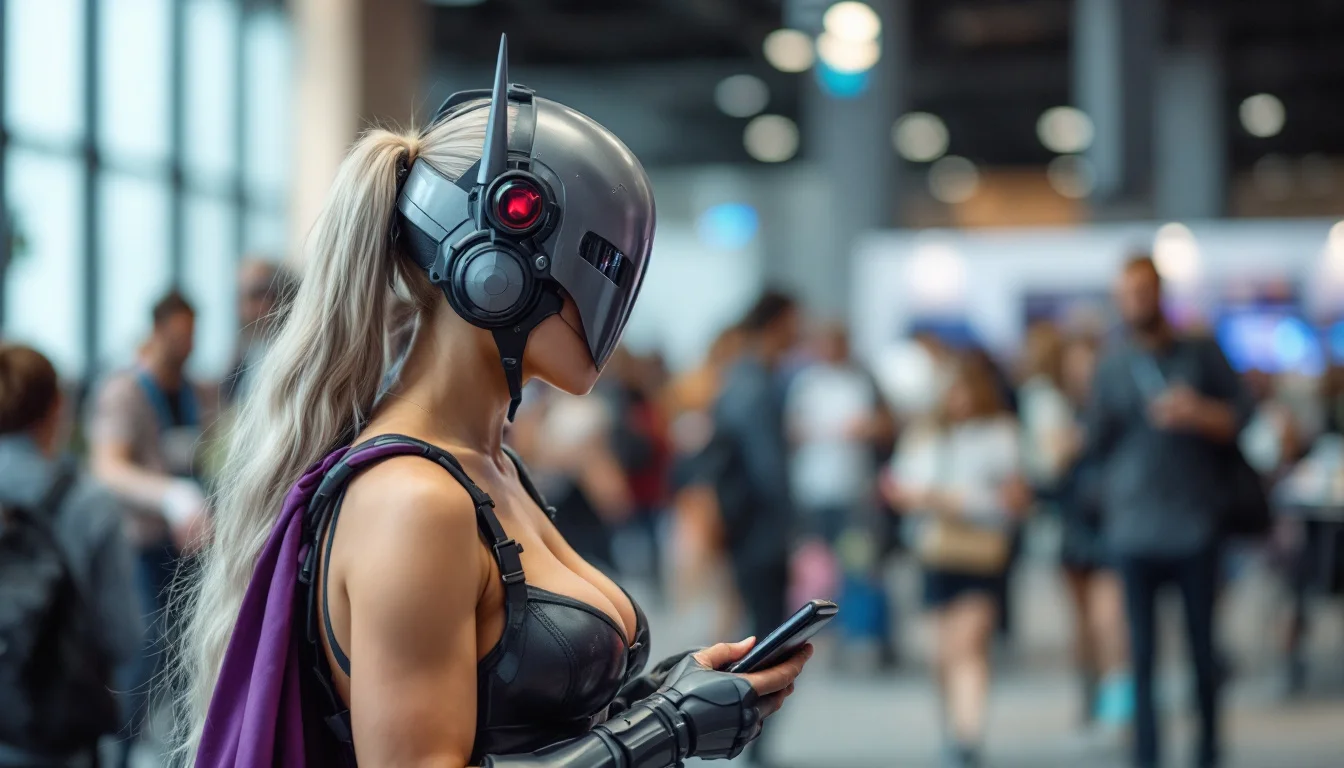
When designing massive armor or sprawling wings, the sheer volume of a costume becomes a real logistical challenge for organizers. Major exhibition centers (such as Antwerp Expo or Namur Expo) explicitly enforce safety, hygiene, cleanliness, and public order.
Entrance Checks and Searches
Arriving in full makeup and heavy gear does not grant you a free pass. At the entrance of many conventions, security personnel reserve the right to deny access. They frequently conduct pat-downs and thoroughly search personal belongings.
Strict Bans on Obstructing Walkways
Once inside, bulky cosplay props (like giant swords or long trains) can become an issue. It is strictly forbidden to block access routes, evacuation paths, emergency exits, fire extinguishers, or stairways. Organizers will systematically remove any objects obstructing these vital areas.
How Is Storage Logistics Handled?
When it comes to getting changed, logistical friction is a real hurdle. Some events provide cosplayers with a free changing area located near the restrooms. However, these spaces are strictly for changing: storing personal items is prohibited. Suitcases, rolling luggage, and large, bulky bags must be checked into the cloakroom. This storage is often subject to a fee, such as €2 per person per day for bags and coats.
What Are the Practical Limits for Bodypaint and Nudity?
Character creation often involves advanced body painting techniques or the crafting of revealing outfits. Nevertheless, conventions strictly regulate the amount of visible skin to maintain a family-friendly environment.
The Limits of Tolerated Nudity
While the golden rule at most conventions is to keep all sensitive areas covered, a few events apply more unconventional policies. Some conventions, for instance, have allowed burlesque-style reveals or bare chests under highly specific conditions, though covering intimate parts remains non-negotiable. For the vast majority of conventions, however, full-bodypaint enthusiasts must ensure their makeup incorporates opaque clothing elements over critical areas, even if the original character design does not feature them.
The Ban on Simulated Sexual Acts
Beyond the outfit itself, behavior on stage or in the aisles is also closely monitored. Many organizers explicitly prohibit any scenes of a sexual nature. This includes simulating sexual acts or orgasms during performances. These measures set a hard boundary for stage acts, serving as a reminder that roleplaying must stop where rule-breaking begins.
How Are Consent and Image Rights Regulated?
For years, the community has championed activist slogans reminding everyone that wearing a costume does not equal consent for interaction. Today, we are seeing this principle formalized into official convention policies.
Regulating Photography
Organizers require attendees to follow clear protocols. Many regulations state in black and white that you must ask for permission before taking a picture of a cosplayer, reinforcing the core tenet that "cosplay is not consent" (which categorically forbids any inappropriate touching). Other festivals enforce a mandatory photo pass. This badge verifies the legitimacy of attending photographers and aims to foster a strong atmosphere of trust with cosplayers.
How Is Stage Content Classified?
This protective logic also extends to the audiences watching the competitions. For certain editions, conventions specify that the event is accessible to attendees aged 14 and up. This age bracket serves as a benchmark for classifying stage performances into two categories: "All Audiences" or "Mature Audiences."
To support this system, cosplayers are often required to submit content warnings ahead of their performance. The goal of this rule is to ensure the host can announce these warnings clearly over the microphone before the act begins. Through this, organizers carefully structure what makes it onto the stage.
Frequently Asked Questions: What Are the Practical Rules at Conventions?
What are the entry rules for prop weapons in Belgium?
Each event has its own guidelines tailored to the venue. For instance, the Made in Asia convention (held in Brussels at Brussels Expo) publishes a specific policy document. It outlines security instructions regulating the materials and props permitted inside the venue to prevent any risks.
What is the maximum allowed duration for stage media?
Competitions require solid technical preparation. In many cases, performance media cannot exceed a duration of 2 minutes, whether it is a solo, duo, or group act. Furthermore, all audio or video tracks must be pre-edited prior to the event.
Can minors roam the convention freely?
The supervision of younger attendees is strictly managed. At the majority of conventions, minors must be accompanied by an adult for the entire duration of their visit.
Is there a ticket discount for arriving in costume?
Some events utilize cosplay as a form of visual entertainment and reward attendees for their effort. Entry is occasionally completely free for visitors who arrive in cosplay, serving as a direct financial incentive.
In Conclusion: Organizing for Your Convention
The enforcement of these rules provides safer spaces and regulates key aspects like crowding, nudity, and photography interactions. However, these measures also place a logistical and financial burden on attendees. Whether it is mandatory paid cloakrooms, size limits on costumes, or strict time constraints for performances, convention cosplay today demands rigorous planning. Integrating these guidelines from the very beginning—during the patterning, material selection, and scriptwriting phases—has become an absolute necessity for artists and enthusiasts alike.