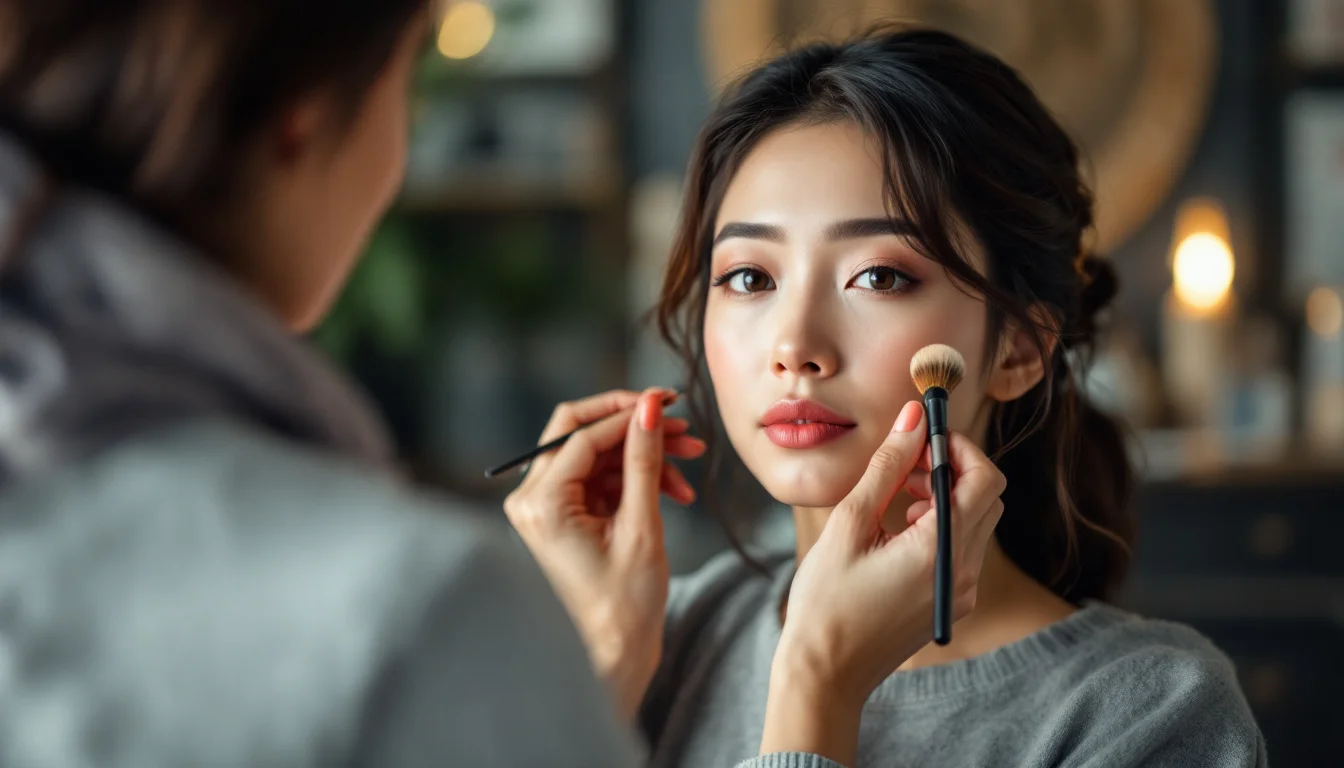
Eye Makeup Illusions: Master the Technical Foundations Before Attempting Advanced Effects
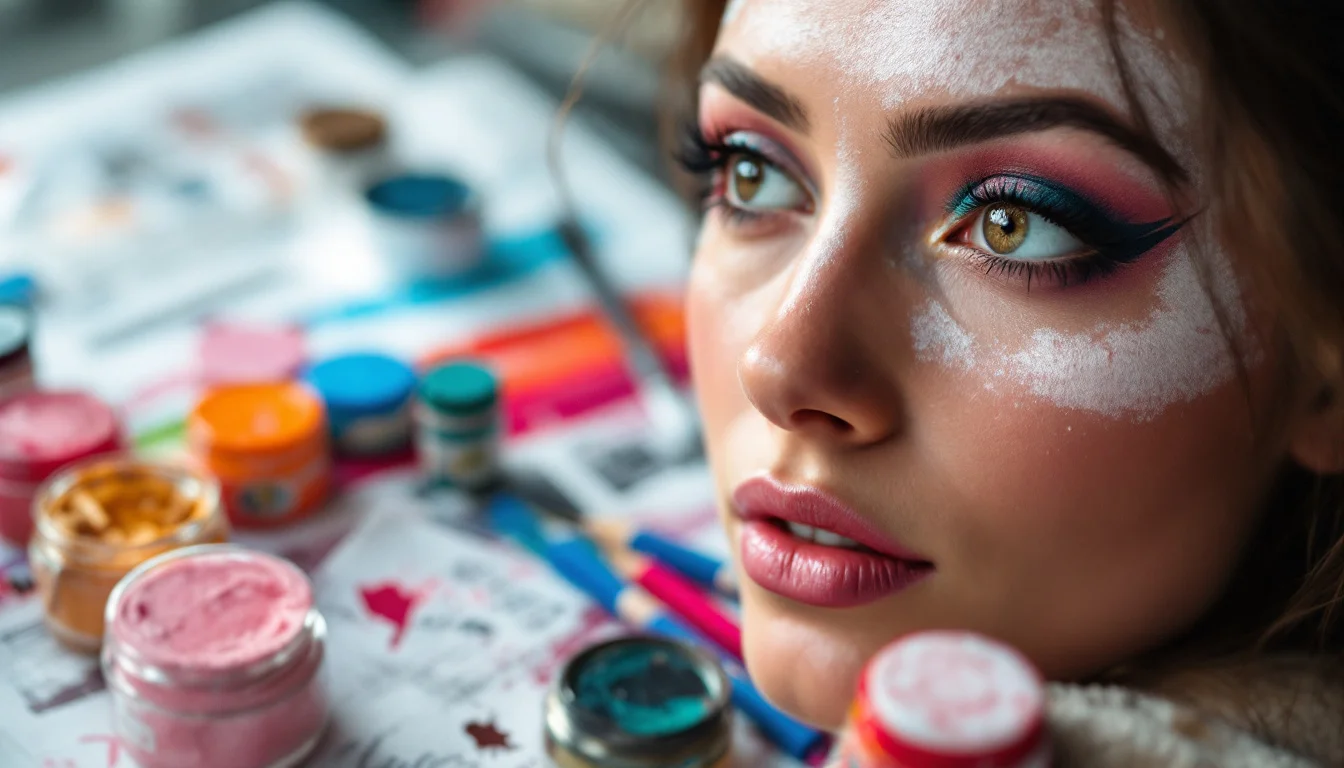
Eye illusions: a miniature canvas
A mobile eyelid, slightly rounded, crossed by creases that shift shape with every blink: it's a temperamental work surface. Makeup professionals often compare it to a canvas, where brushes serve both to apply color and to blur it, erasing any trace of technique.
Before attempting the most spectacular effects seen at cosplay conventions — painted pupils, redrawn irises, entirely transformed gazes — there exists a common technical foundation underlying every successful eye illusion. This foundation, well-documented, is what this article details. Advanced ocular body painting techniques rely on specialized products and expertise that available sources don't yet reliably cover.
The fundamentals in brief
Before diving into details, here are the reflexes that make the difference between an illusion that holds and one that shows:
- apply a colorless primer before any eyeshadow to set pigment and prevent migration;
- never pull the eyelid taut while drawing; the line distorts once skin relaxes;
- work with small hatch marks between lashes rather than a solid line for greater depth;
- adapt the line to your eye shape rather than copying a universal model;
- set the result with translucent powder or shadow matching your skin tone to extend wear time.
Why the eye area requires special preparation
The eyelid is not like other skin. It's thinner than the rest of the face, which can facilitate the penetration of products applied to it, according to a Conversation article on risky substances and skin sensitivity in makeup. This delicacy alone justifies rigorous hygiene before any artistic application.
Simple but non-negotiable rules
Before drawing the first line, a few reflexes limit irritation:
- wash your hands before and after application;
- clean brushes and applicators regularly;
- never share products, especially around the eyes;
- monitor any unusual skin reaction (redness, itching, swelling).
What you should know about nanomaterials
Some makeup formulas contain nanomaterials. According to the same Conversation article, they remain localized in the epidermis without penetrating deeper into the body, though their long-term safety remains under study. This warrants caution without justifying disproportionate concern.
Eyeshadow format matters too
Powders tend to dry out skin. On already-dry eyelids, it's better to choose another format — cream or stick — rather than insisting with powder shadow that will intensify tightness, a point also noted by The Conversation.
Primer: the invisible layer that holds everything together
Before any color comes an invisible step that conditions everything else: primer. This colorless base goes on first, before eyeshadow, according to Parfumdo's beauty guide on eyelid makeup.
Its role is twofold. It prevents pigment from migrating into eyelid creases over time, and it intensifies colors applied on top; it also means using less product overall, according to Parfumdo. For an illusion where every line must remain readable for hours without smudging, this step often makes the difference between an illusion that holds and one that falls apart on the first blink.
Eyeshadow quality: an underestimated factor
Primer can't fix everything. Budget eyeshadow tends to powder more and has lower pigmentation, sometimes requiring under-eye cleanup and concealer reapplication midway through, notes Parfumdo. For precision work, this kind of mishap immediately breaks the intended illusion: it's better to invest in a small number of reliable products than to accumulate cheap alternatives.
The pencil: the versatile tool for eye illusions
The pencil is a versatile tool for creating eyelid illusions. Fanny, a makeup artist cited by MÊME Cosmetics, explains for instance how it can recreate the illusion of lashes for people affected by alopecia — an eye illusion in its own right, openly acknowledged as such.
To create depth without ever showing a pencil stroke, the method involves small hatch marks between lashes rather than a solid line, according to the same MÊME Cosmetics article.
Different strokes for different eye shapes
The same tool produces very different effects depending on placement and target eye shape. MÊME Cosmetics details several variations that can serve as starting points for building more elaborate illusions.
| desired effect | technical technique | targeted eye shape |
|---|---|---|
| "doll" gaze | line flush with lashes, upper lid only | round eyes |
| enlarge gaze | flush-lash line upper and lower, joined at outer corner | small eyes |
| elongate gaze | fine line at outer corner, pulled toward temple | round eyes |
| soften drooping lids | soft, smudged strokes with eye open, gaze straight ahead | drooping lids |
| more depth, natural finish | fine hatch marks between lashes | all eye types |
The detail that changes everything for drooping lids: keep your eye open and look straight ahead while drawing, a guideline MÊME Cosmetics associates directly with this eye shape.
Mistakes that betray failed makeup
A botched eye illusion shows immediately: the line is crooked, the gaze looks forced, or the makeup "shifts" within hours. MÊME Cosmetics and Parfumdo identify several recurring pitfalls, all avoidable once recognized.
- Pulling the eyelid taut while drawing. This is the most-cited mistake from MÊME Cosmetics: by stretching skin for easier application, the line distorts once the lid relaxes and no longer matches the eye's actual shape.
- Neglecting skin prep. Hydrating the eyelid is useful, but you must let the cream absorb first — otherwise excess moisture greases the area and prevents pencil or shadow from adhering, according to MÊME Cosmetics.
- Using a poorly sharpened pencil. A dull tip or clogged brush applicator produces an uneven line, even with good technique. Regular tool cleaning fixes this.
- Mishandling the lower lash line. An overly heavy or poorly placed stroke here can create a drooping eye impression, opposite the intended effect, warns Parfumdo.
- Overdoing glitter. Its sparkle shows best when used sparingly; thick application draws attention to texture rather than line work, according to Parfumdo.
Minimal supplies to get started
You don't need a huge kit. Parfumdo recommends a streamlined collection of reliable staples rather than accumulating products:
- quality eyeshadows with enough pigment to minimize touch-ups;
- a primer to set color and prevent pigment migration;
- brushes with different tip styles — one for application, one for blending;
- several pencils in different shades to vary intensity by desired effect;
- an eyeliner for sharp, structured lines.
Before aiming for all-night wear
For effects meant to last several hours, a convention, or an evening, the natural instinct is to choose the product marketed as most resistant. Available data invites nuance here.
According to The Conversation article on risky substances and skin sensitivity, the highest PFAS levels are detected in waterproof and long-wear makeup. The same article mentions detection of heavy metals — nickel, chromium, cobalt — at elevated concentrations in some eyeshadows, based on global data not specific to any one market; this isn't a localized alert but general caution guidance.
Faced with this finding, a documented alternative exists to extend line wear without multiplying long-wear product layers: fix the pencil with translucent powder or matching-shade shadow, a technique detailed by MÊME Cosmetics.
For the most advanced effects — fully repainted irises cosplay-style, for example — the products involved fall into specialized body paint, a segment where available sources don't yet provide reliable data on wear or removal. In this case, a preliminary test on a small skin patch far from the eye area remains the simplest precaution before applying new products to such sensitive skin.