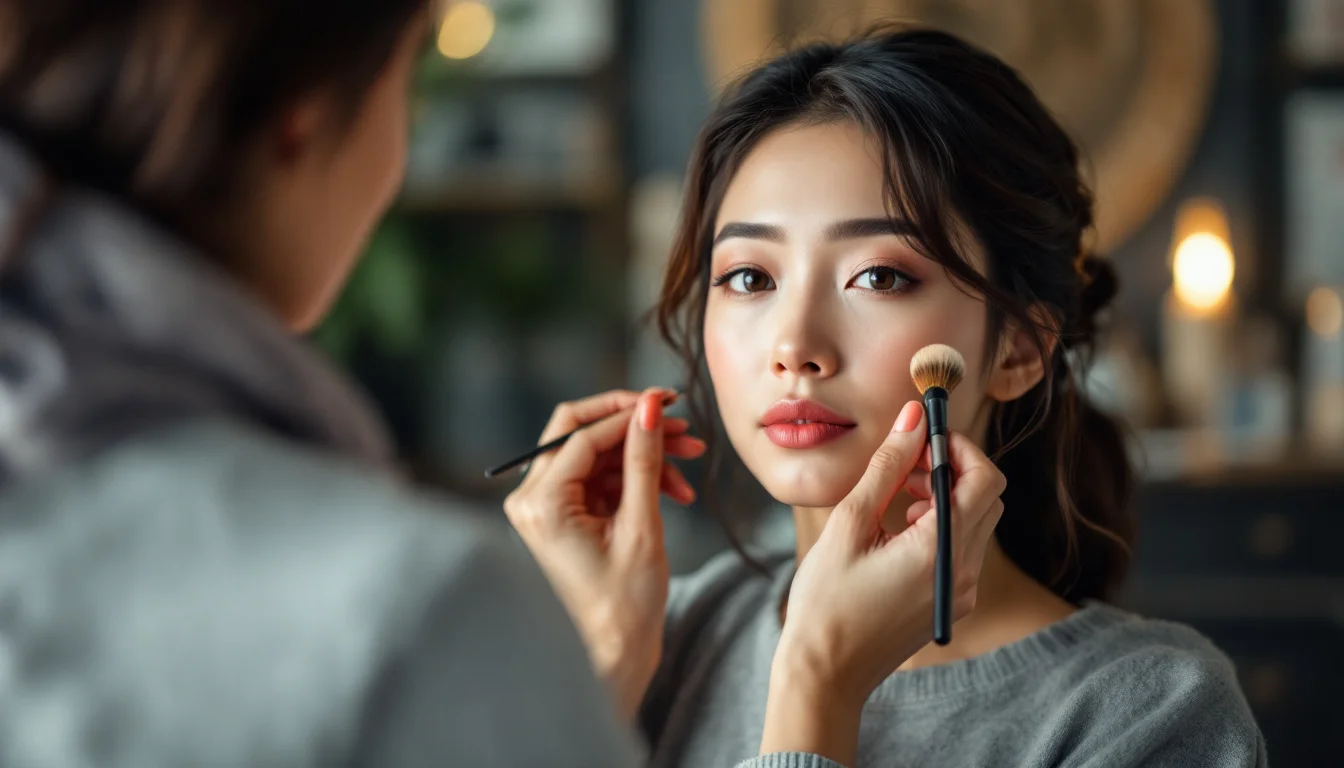
Crossplay Makeup: The Engineering of Contouring

Stepping into the shoes of a fictional character takes creativity, but altering the very perception of your gender is a feat of pure visual engineering. In the bustling world of fan conventions, the term "crossplay"—well-documented in the English-speaking community since the 1990s—refers to dressing up as a character of the opposite gender. It is a discipline that pushes enthusiasts to completely rethink the architecture of their faces.
This technical challenge fascinates the community because it isn't about piling on layers of color to look pretty; it's about restructuring facial volumes through optical illusion. The goal is ambitious, fundamentally altering the visual structure of one's facial features. Top-tier crossplayers can easily fool an untrained eye regarding their actual gender, which is widely considered the ultimate challenge of crossplay. To execute this transformation from a feminine to a masculine face, makeup brushes essentially become sculpting tools.
Key Takeaways
- Subtracting light: A masculine face is achieved by significantly reducing the highlighted areas compared to standard feminine makeup.
- Anchoring the jawline: The core of the illusion relies on creating sharp angles along the lower half of the face.
- Gradual powder application: Darker shades must be added sparingly to avoid a caked-on, mask-like effect.
- The blending imperative: Transformative contouring is only successful if the transition between shadow and skin remains undetectable.
The Mechanics of Illusion: The Shadow Paradox
The art of facial transformation relies on a nuanced understanding of how the human brain decodes visual signals tied to gender. According to the approach championed by Les Dégenreuses, crossplay serves as proof that masculine or feminine appearances are essentially sets of somewhat arbitrary aesthetic criteria that either sex can fulfill with relative ease. By manipulating these criteria, it becomes clear that aesthetic masculinity is not a fixed biological trait, but a surface that can be "performed" with the right tools.
This performance rests on a fundamental technical paradox. To masculinize one's features, you have to unlearn standard cosmetic habits. In the masculine contouring diagrams presented by Le Contemporaliste's technical guide, highlighted surfaces are intentionally limited. The key is to avoid creating roundness or plumpness on the cheekbones—features culturally associated with femininity.
Invisibility as the Standard
While stage makeup tolerates exaggeration, gender illusion demands strict discipline. The golden rule for masculine makeup is subtlety: the result must remain imperceptible (Le Contemporaliste). The success of these shadow mechanics lies in making the observer see a modified bone structure rather than a layer of pigment. It is precisely this tension—between heavily restructuring facial volumes and maintaining an invisible finish—that makes the exercise so captivating.
Classic Crossplay: The Foundations of a Character
Facial metamorphosis is always part of a broader approach involving the body and overall attitude. Crossplay goes both ways: a girl dressing as a boy (FtM) and vice versa (MtF), as noted by the blog Les Dégenreuses. The community also distinguishes between several different approaches to this stylistic exercise, which directly dictates the intensity of the contouring required.
Crossplay is generally divided into three main categories: ironic, "re-creation," and classic. Whereas the ironic approach plays on comic exaggeration of features, classic crossplay aims to recreate the appearance of an opposite-sex character as faithfully as possible, which involves actively trying to conceal the physical attributes of one's own gender.
The Synergy of Techniques
To pull off this classic category convincingly, contouring never works alone. It integrates into a broader set of wardrobe and styling tricks that validate the illusion. A few well-placed shadows on the face, a bound chest, and short hair are often enough for a woman to successfully pass as a male character. This combination acts as a powerful trompe-l'œil: the observer's brain connects these three visual cues and immediately concludes it is looking at a masculine character.
Facial Mapping: Where to Place Light and Shadow
Practicing illusion contouring requires mapping your face with surgical precision. It's about pinpointing natural curves in order to hollow them out, and identifying bone structures to make them appear more prominent.
Working with Dark Volumes
According to Le Contemporaliste's technical guide, the brunt of masculine contouring focuses on the jawline to highlight "distinctly masculine" features. By hardening this lower angle, you break the natural oval shape of the face. Dark powder is used to structure the cheek and jaw, creating a shadow line beneath the maxillary bone to simulate a squarer, more imposing jawline.
Shadow modifiers also serve a corrective purpose for other cranial proportions. Dark powder is used to slim the nose, while a dusting of dark contour at the top of the forehead creates the illusion of a lower brow, mimicking the lower, straighter hairlines often seen on fictional male characters. Finally, a handy trick to sharpen the profile: a strategic dark spot can minimize the appearance of a double chin.
Strategic Placement of Light
The management of highlighting powder, though minimalist, is equally strategic. It contrasts with the shadows to bring out the bone structure without ever adding unnecessary shimmer. Light powder is applied to five specific areas: the nose, the tops of the cheekbones, the forehead, the brow bone, and the chin (Le Contemporaliste). Applied in thin strokes or sharp, angular dabs, it simulates the areas where the skin stretches tight over a more pronounced skeletal frame, putting the finishing touches on the character's visual engineering.
The Cosmetic Arsenal: Palette Comparisons and Brush Selection
The success of this transformation relies heavily on choosing the right tools. To analyze the options currently on the market, Le Contemporaliste's technical guide evaluated the pigment performance of three popular contouring products, specifically testing them for masculine illusion purposes.
Three products were tested: the Shade + Light palette by KVD Vegan Beauty (formerly Kat Von D), the Highlight & Contour Pro Palette by Nyx, and the Contouring 101 Face Palette by Sephora. The first two share a similar layout, featuring a row of light shades on top and dark shades on the bottom. Here is the application comparison as reported by the guide's author:
| Brand and Palette | Format and Layout | Pigment Behavior and Application | Aesthetic Result |
|---|---|---|---|
| KVD Vegan Beauty (Shade + Light) | Light rows on top, dark rows on the bottom | Pigments are described as highly durable; must be applied sparingly. | Allows for strong, long-lasting contouring, ideal for long conventions, provided the application is expertly controlled. |
| Nyx (Pro Palette) | Light rows on top, dark rows on the bottom | The round pans are considered harder to work with using a brush, with a tendency for fallout around the edges. | Risk of losing the crisp, sharp angles required for masculine makeup. |
| Sephora (Contouring 101 Face) | Shades are very close to one another in tone, which can be initially confusing. | Offers incredibly subtle transitions thanks to the closeness of the shades. | Yields a much more natural look than the other two brands, making the imperceptible effect easier to achieve. |
These evaluations reflect the subjective opinion of a single tester and may vary depending on individual skin tones and techniques.
The Art of Application and Blending
Choosing the right powder isn't everything: the application technique is absolutely vital. Le Contemporaliste warns that using too much dark powder is notoriously difficult to blend out; it is always better to add more as needed rather than packing on a large amount right away. This cautious approach prevents saturating the skin and breaking the illusion. Furthermore, blending is presented as a mandatory step in contouring—the crucial phase that melts artificial shadow seamlessly into your natural skin tone.
To execute this precision work, the tool is just as crucial. A versatile synthetic-bristle brush can spread liquid foundation, apply bronzer, or sculpt the face with contour powders. Its versatility makes it the perfect fit. To guarantee consistently clean transitions, maintaining the brush is a must: regular washing with Marseille soap or a dedicated brush cleanser, followed by drying flat or upside-down to protect the glue in the ferrule.
Frequently Asked Questions (FAQ): Transformational Makeup
Why don't traditional contouring tutorials work for male characters?
Classic tutorials typically aim to soften angles, enhance the roundness of the cheekbones, and bring overall luminosity to the face. For a masculine aesthetic transformation, the approach is entirely reversed: you need to break down roundness by avoiding large highlighted areas, favoring deep shadows instead to create sharp, angular lines (on the jaw, nose, and forehead).Can I use cream contours instead of powders for the shadows?
While powders are usually preferred for their dry, matte finish that closely mimics natural shadows, it is technically possible to sculpt the face using creams. However, you must have the right brush (such as a versatile synthetic model) and perfectly master blending the products into the skin.Conclusion: Beyond Disguise, a Mastery of Anatomy
The practice of illusion contouring proves that makeup goes far beyond mere vanity, touching on pure anatomical study. By forcing cosplayers to reverse their usual habits and view their faces through the lens of bone architecture, it is safe to say that this technique sharpens their artistic eye. Paradoxically, it is often by striving to erase the softness of their own features to embody masculinity that a person develops the most acute understanding of how light interacts with their own morphology. This shadow engineering proves that our faces are much more malleable canvases than we might think.