How to Paint Tribal Character Markings

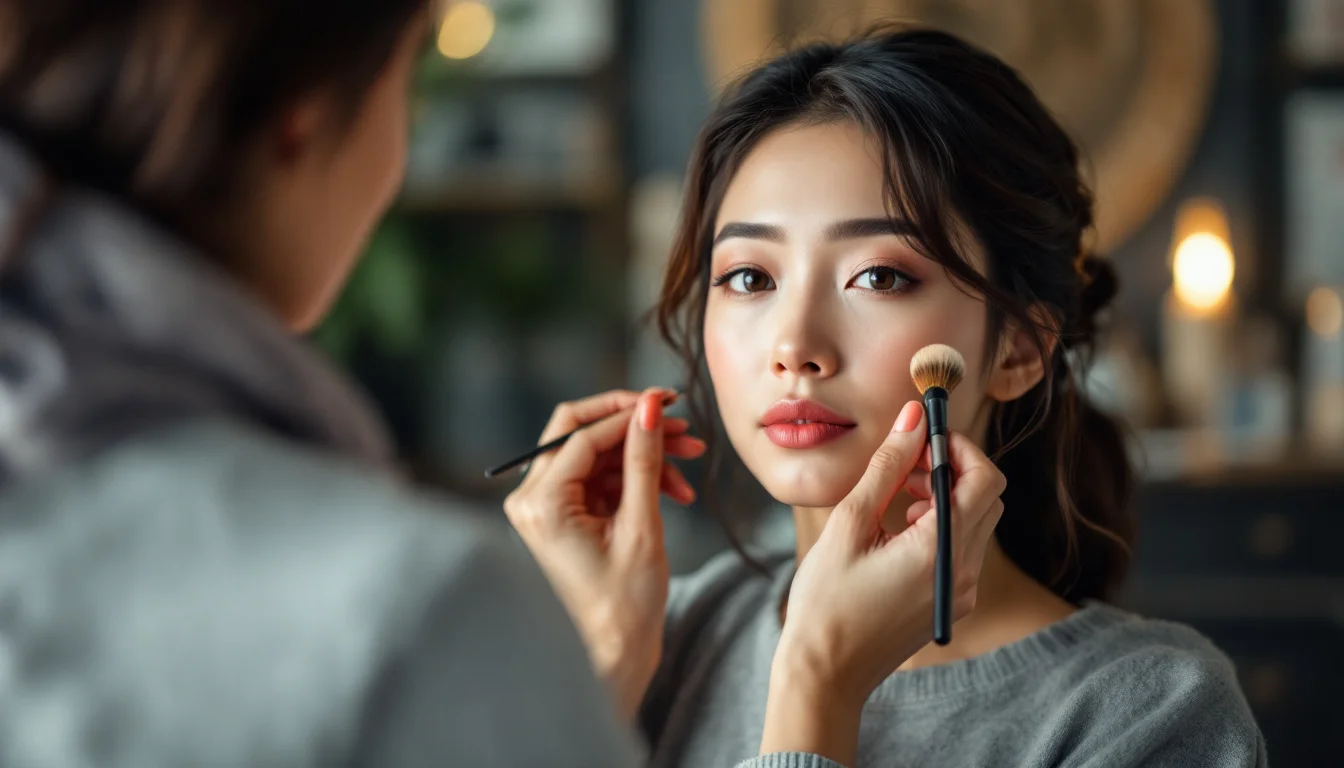
Embodying your favorite character sometimes requires pushing the boundaries of traditional makeup. When embarking on a project that involves tribal markings, war paint, or complex body tattoos, preparation takes on a whole new dimension. Belgian and European conventions are unforgiving environments: between the stifling heat, the sweat trapped under synthetic wigs, and the constant friction of EVA foam armor, a poorly executed design will likely melt away in a matter of hours.
However, the challenges aren't strictly chemical or material. Before even opening a bottle of ink or shaking a setting spray, the cosplay community encourages thoughtful consideration of your chosen design. Today, painting symbols on your skin raises crucial questions about the line between creative homage and cultural appropriation. Navigating this space requires a delicate balance. It's about mastering the sheer technique needed to make your artwork survive the day, while simultaneously respecting the ethical boundaries that govern our shared passion.
Key Takeaways
- Cosplay body art answers a fundamental need for identity expression, but a clear line must be drawn between pure fiction and real human cultures.
- Controlling the pressure of water-based tools offers incredible versatility for drawing precise facial motifs.
- A specialized setting spray is essential to prevent water-based inks from dissolving during an intense day at a convention.
1. What Are the Ethical and Identity Rules for Skin Painting?
Modifying one's physical appearance with color is hardly a recent invention of pop culture enthusiasts. In 2016, the MAS (Museum aan de Stroom in Antwerp) dedicated an exhibition called "Body Art" to corporal art in all its forms—from makeup and tattoos to scarification and surgical modifications—across time and cultures (mas.be/fr/activite/body-art).
According to this exhibition, tattoos, piercings, and makeup are body art practices that have seamlessly woven their way into everyday life. They serve to express identity, signal belonging, and present oneself in the best possible light. At conventions, this sense of belonging translates into fully embracing a fictional universe's aesthetic, often inspiring cosplayers to replicate specific facial or body markings.
The Red Line of Cultural Appropriation
While the drive for perfection might tempt you to replicate every minor detail, the community has established strict boundaries to ensure an inclusive and respectful environment.
A published guide on the subject (geekgirlpenpals.com/cosplay-for-every-body/) lays down a fundamental principle: in cosplay, a character's baseline makeup is always acceptable.
There is no need to alter the shape of your eyes or "tint" your skin tone to match a character of a different real-world ethnicity. Respect for the original creation never justifies appropriating or caricaturing the physical traits of an actual culture.
Making an Ethical Choice
To clear up any doubts before starting a body painting session, you can make your decision using a simple two-step process:
- Does the motif or targeted skin tone belong to a real human culture? If so, altering your natural complexion is considered offensive. Using real-world sacred or tribal symbols outside of their cultural context constitutes appropriation.
- Does the character belong to a fantasy or extraterrestrial universe not rooted in reality? Painting your skin green, pink, or purple for a fictional character is perfectly acceptable, as no real-world culture is built around these imaginary worlds.
2. Water-Based Markers or Waterproof Transfers: Choosing the Right Body Painting Supplies
Once the concept is approved, the technical execution phase begins. Your choice of tools will determine not only the precision of your linework but also how the color behaves on your skin when you move.
Your application technique will vary drastically depending on the method you use to lay down the pigment.
Mastering Freehand Drawing
For cosplayers who prefer total control and freehand drawing, specialized tools offer incredible flexibility.
According to a practical guide from the manufacturer (nailmatic.com/fr/blog/atelier-body-painting-pour-petits-et-grands-avec-tattoopen-n96), the line thickness of a temporary tattoo marker is controlled by the angle of the tip and the pressure applied: a single tool can therefore produce both fine and bold strokes.
This dynamic is ideal for recreating the crisp edges typical of war paint or magical glyphs; you simply ease up on the pressure at the end of your stroke to taper the point of the design.
When it comes to spatial composition on the face, a basic starting point is to use a black marker to draw two large, differently sized circles around each eye. This simple foundation instantly frames the gaze and serves as an anchor for adding further tribal details.
Technical and Professional Alternatives
Before settling on a method, evaluating a short list of criteria can help point you in the right direction:
- Occasion: indoor conventions or outdoor festivals.
- Duration: just a few hours or a full weekend.
- Skin sensitivity: the need for dermatologically tested inks versus dense polymers.
- Removal: simple cleanup with water or specialized makeup removers.
- Budget: affordable markers versus professional services.
| Technical Solution | Product / Technique Type | Water Resistance | Ideal Use Case |
|---|---|---|---|
| Water-Based Markers (e.g., TATTOOPEN) | The formula for TATTOOPEN markers is primarily water-based. | Low (without a setting spray); dissolves on contact with sweat. | Freehand drawing, easy adjustments, short or indoor conventions. |
| Waterproof Transfers | The temporary tattoos from ArtWear Tattoo (artweartattoo.fr) are designed to be highly realistic and waterproof. | Very high; repels moisture and withstands moderate friction. | Applying pre-made generic designs, intense outdoor events. |
| Professional Airbrushing | Application of cosmetic pigments sprayed via an airbrush. | Variable; often sealed with durable polymers during application. | Ambitious projects, cosplay competitions, full-body coverage. |
For those aiming for competition-level excellence and looking to delegate this complex task, local solutions are readily available. Ephemgrim, a professional makeup artist based in Brussels/Anderlecht, offers services in Belgium that include children and adult face painting, temporary airbrush tattoos, UV black light animations, as well as film and bridal makeup (ephemgrim.be/services/). This Brussels-based artist has undergone dedicated professional training in cinematic and bridal makeup. Enlisting this level of expertise allows you to achieve complex gradients and a structural durability that freehand work alone often struggles to match.
3. How to Seal and Set Your Makeup for a Full Day at a Convention
Even the most stunning body art is useless if it fades before you even step foot on the convention stage.
The pigment application stage detailed above must absolutely be followed by a sealing phase. This process involves laying down a transparent barrier over the makeup to lock the components in place, which is especially critical if you are using water-based formulas.
The Importance of a Protective Barrier
Makeup professionals strongly emphasize this finishing touch.
In fact, the Belgian retailer Di dedicates an entire advice page to setting sprays, highlighting them as an essential component for achieving long-lasting makeup (di.be/fr/pourquoi-le-spray-fixateur-est-essentiel-pour-un-maquillage-longue-tenue.html). By misting this kind of product over your skin, you create an invisible film that repels body sweat and minimizes color transfer onto the insides of collars and armor pieces.
Equipment Accessibility
Sourcing these setting tools is incredibly straightforward for Belgian enthusiasts today.
A wide variety of products makes it easy to choose a setting spray tailored to your desired finish (matte for gritty, darkened war paint, or dewy for luminescent alien skin).
Other specialized brands build their entire product lines around this specific need. For example, the brand ARTDECO features a "Fixing" collection dedicated exclusively to setting sprays for long-lasting makeup (artdeco.com/fr-fr/collections/fixing).
Systematically packing a setting mist in your cosplay emergency kit for midday touch-ups is a foolproof way to preserve the integrity of your tribal markings.
4. How to Remove Your Makeup Without Damaging the Skin Barrier
Returning to reality after a weekend of total immersion is often accompanied by sheer exhaustion. At this point, it's incredibly tempting to aggressively scrub your skin to remove any lingering dye, but doing so risks severely damaging your skin barrier.
Gentle Dissolving
Fortunately, if you opted for water-based tools during your prep, the removal process is much simpler.
Removing water-based body paint requires nothing more than a damp washcloth and a little soap—or a good shower if the designs cover your entire body.
The water-based pigment easily dissolves with soap and water. If a setting spray was applied over the top, you might need a dedicated makeup remover to break through the barrier; a gentle massage is plenty, without needing to resort to abrasive sponges.
Frequently Asked Questions (FAQ) About Temporary Body Art
Can these inks be applied to all areas of the face?
The areas around the eyes and mouth require specific precautions when applying cosmetics. TATTOOPEN temporary tattoo markers are safe for both body and face use, including the cheeks and forehead. However, it is always highly recommended to perform a patch test beforehand and strictly avoid any direct contact with the eyes or mucous membranes.
At what age can a child wear these character markings?
Cosplay is increasingly becoming a family activity, which naturally raises legitimate questions about skin tolerance for younger fans. TATTOOPEN temporary tattoo markers are suitable for children ages 3 and up. This allows you to safely include the little ones in the costume creation process with complete peace of mind.
Conclusion
The practice of body art in cosplay now offers highly technical solutions, moving away from precarious DIY hacks and leaning on increasingly accessible cosmetic engineering. The adaptation of consumer formulas—with brands now offering complete setting ranges and skin-friendly inks—shows a growing understanding of this subculture's unique demands. But as these products become more accessible and effective, the community's responsibility grows as well: the duty to pair technical excellence with thoughtful visual expression, ensuring that fantastic creativity never encroaches upon the respect owed to real-world cultures.