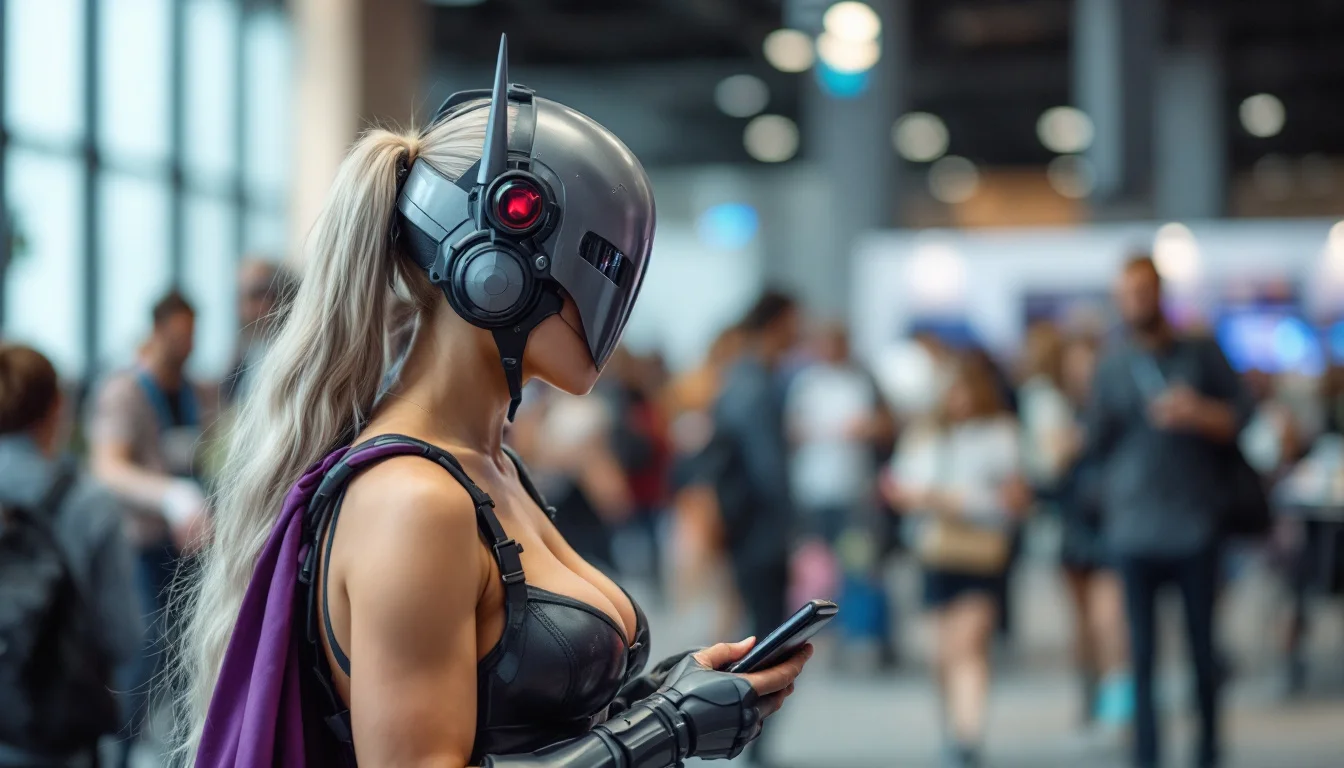
Kig Makeup or Animegao Mask? The Ultimate Guide
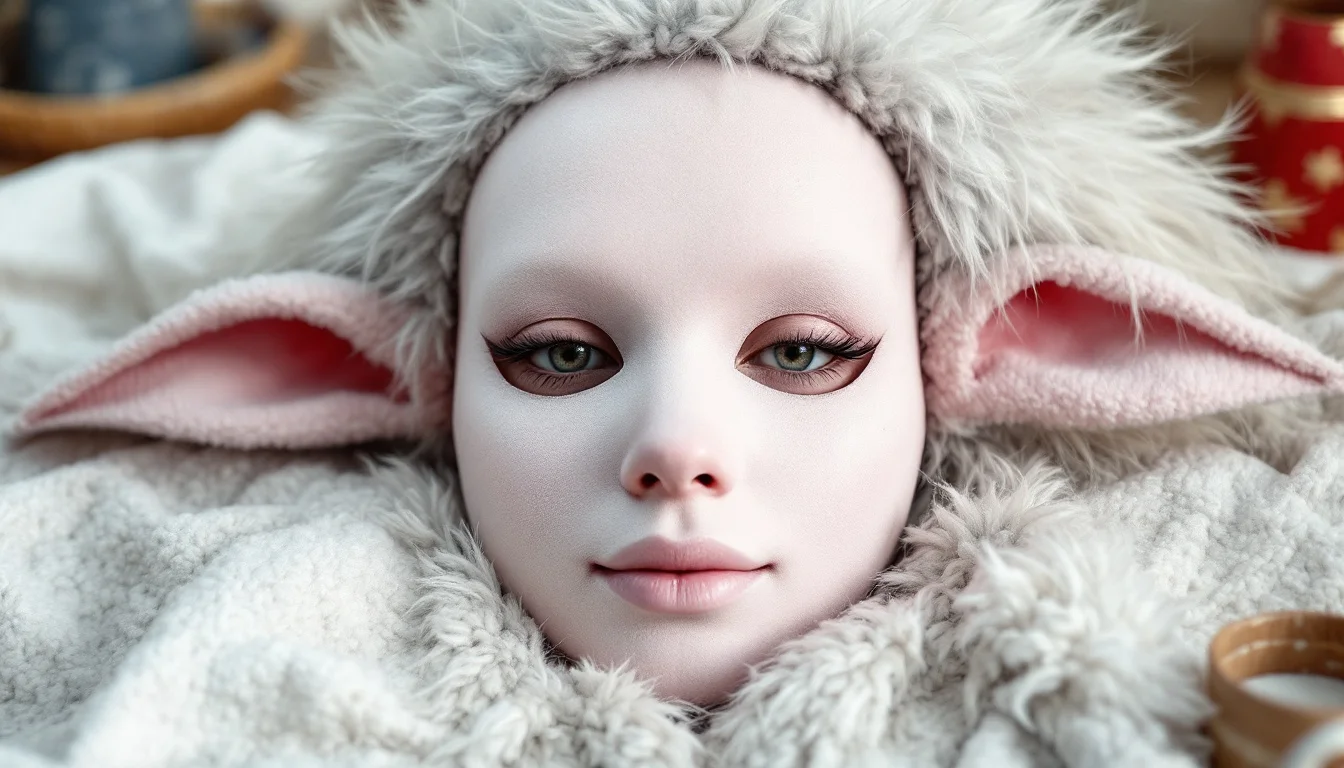
The craze for manga character cosplay often pushes enthusiasts to seek out cutting-edge techniques. Have you spent hours hunting for the perfect contouring tutorial, hoping to transform your human features into a flawless 2D illusion? It's a classic rookie mistake. The secret to a smooth, perfectly stylized face won't be found in any makeup palette.
Key Takeaways
- No makeup: Contouring cannot hide the natural volumes of the human skull.
- Zentai is essential: A full-body suit erases human physical attributes (nails, body hair).
- Animegao mask: The face is replaced by a rigid sculpted shell with stylized proportions.
- Golden rule: Eye spacing on the mask dictates the overall harmony of the manga face.
From Kabuki to Animegao: Understanding What You're Really Wearing
Before handling any resin, it is fundamental to understand the cultural heritage behind this discipline. The art of concealing the human form to embody an idea wasn't born with modern pop culture.
The blog janbox.com draws simplified aesthetic parallels with kabuki and bunraku to touch upon the Japanese masked costume tradition. While it's true that classical kabuki actors used exaggerated makeup to portray monsters and ghosts, and bunraku sometimes employs black-clad puppeteers (kuroko) who visually erase themselves to let the puppet shine, anime's genealogy relies on more direct influences (such as Osamu Tezuka, American animation, or the ukiyo-e illustration tradition). Nevertheless, this desire to transcend the body is very much present in our modern practice. As for mask-style kigurumi, its origins are generally traced back to cosplay circles and independent artisans in 1990s Japan. Mask production ramped up alongside the boom in anime cosplay during that decade, a trend that quickly caught on with Japanese singers and celebrities before snowballing into a full-blown phenomenon in the mid-2000s and eventually spreading to the West in the early 2010s.
However, modern vocabulary often causes confusion within the French-speaking community. Based on current classifications, there are three main distinct forms of kigurumi: full-body character mascot suits, standalone masks, and full-body animal pajamas (onesies). The latter should not be confused with technical manga or anime character cosplay.
Conversely, this specific masked cosplay is accurately referred to as "kigurumi." To reconcile these approaches, we can look to community usage: mask-style kigurumi is often called "animegao." This term, which literally translates to "anime face" in everyday Japanese, is a portmanteau of "Anime" (アニメ) and "Kao" (顔 or かお, meaning "face"). It thus stands apart from traditional kigurumi in that it only covers the head, pairing with the iconic zentai for the rest of the body.
The Non-Human Theory: Why Your Anatomy Ruins the Illusion
The biggest trap when designing a mask lies in our own visual perception. Our brains are wired to replicate what they know: realistic proportions. Yet, a real human face features far too many details that actively destroy the manga aesthetic.
To achieve an anime-style face, you must instead "forget" human facial anatomy, as explained by the blog kigu-rin.blogspot.com. Trying to incorporate a distinct nose, fully sculpted lips, and full cheeks has absolutely no place on a face sporting massive, round eyes. For a truly authentic "anime" look, the process requires drastically stripping back details and highly stylizing them.
Here are the crucial transposition rules to follow during modeling:
| Feature | Human Anatomy | Animegao Stylization |
|---|---|---|
| Chin | Broad, defined by the jawline | Pointier, extremely tapered |
| Cheeks | Full, pronounced volume in the center | Cheek curves lowered |
| Nose | Defined bridge, visible nostrils | Less defined or even flat nasal bridge |
| Lips | Fully sculpted, plump | Simple lines, lack of natural relief |
Managing the gaze is the keystone of this architecture. Eye spacing dictates the balance of the sculpt. A good starting point is the classic rule of academic human drawing: spacing the eyes "one eye-width" apart. While this serves as an initial benchmark, many anime styles deliberately and significantly deviate from it to accentuate a youthful, stylized look. Moderation, however, remains key: excessive spacing instantly backfires, creating an unsettling or deformed effect that ruins the desired harmony.
Tutorial: The 4 Steps to Modeling Perfect Kig Mask Proportions
Let's get practical. Crafting an animegao requires rigorous upfront preparation. Follow these four methodological steps to structure your template.
Step 1: The Hunt for Official References
The first design step involves researching your character online and selecting crisp, clear images. Don't just settle for fan art with diverging styles. You should prioritize visuals that clearly show the face and the exact graphic style you want to replicate. For this, character sheets, official turnarounds (multi-angle views), and artbooks are the absolute best references.Step 2: Symmetrical Face Cloning
Even official drawings contain asymmetries due to the animator's pencil strokes. To correct a reference face's asymmetry, the best method is to use photo-editing software. Digitally trace one half of the face, mirror it, and attach it to the other half. This perfect symmetry is vital. Next, trace the desired eyes and paste them onto this newly unified face.Step 3: Adjusting Eye Spacing
Once the face is unified, apply the aforementioned academic proportion rule as a starting point. Measure the width of one of your vectorized eyes and ensure that the empty space between the two eyeballs on your template roughly matches that same width. Adjust as needed, keeping in mind that anime styles often deviate significantly from this to achieve highly caricatured aesthetics.Step 4: The Scale Test on a Human Body
The animegao mask is intentionally macrocephalic (oversized) to compensate for human shoulder width. To determine the exact size of the mask you need to make, it's highly recommended to take a full-body photo of yourself standing next to a physical ruler.Then, in your software, superimpose the character's head onto your photo. Adjust the layer size until you achieve the illusion of correct proportions relative to your own shoulders. This paper prototyping step requires patience to lock in the perfect scale before moving on to the next phase.
Testing Phase: Why a Miniature is Essential Before Sculpting
Once the scale is finalized on paper, it's incredibly tempting to rush straight into a life-size block of clay. This is the fastest way to waste your materials.
Miniatures are a time-honored tool used by professional sculptors. Creating a scaled-down version first allows you to practice the most difficult 3D shapes before committing to the final mask. This prototyping step secures your workflow. It lets you physically verify how light reacts on the tapered chin or whether the less-defined nasal bridge blends harmoniously into the profile. By practicing on a smaller model, you learn to manipulate volumes without risking ruining your primary piece.
Limitations and Discomfort: Behind the Scenes of Animegao
While the animegao shell offers unparalleled visual fidelity, it imposes significant physical constraints that standard makeup simply doesn't. Wearing a full head mask drastically reduces your field of vision. The heat generated inside the shell, combined with wearing a zentai suit, requires regular breaks and careful ventilation management. Furthermore, this type of cosplay represents a much larger time investment just to get dressed, as well as maintenance costs for both the mask and zentai that a simple cosmetic palette would never require.
Comparison Table: Traditional Makeup vs. Animegao
| Criteria | Traditional Makeup (Contouring) | Animegao (Mask + Zentai) |
|---|---|---|
| 2D Fidelity | Limited by skull volumes | Very high, conceals human features |
| Thermal Comfort | Good | Low (significant heat) |
| Prep Time | Medium (1 to 2 hours on the day) | Fast once made, but complex to put on |
| Field of Vision | Full | Highly restricted |
| Facial Mobility | Retains expressions | Static, rigid mask |
Frequently Asked Questions (FAQ): Animegao Essentials
Do I need to invest in cosmetics to wear under the mask?
No. Since kigurumi (animegao) is a masked form of cosplay that adopts manga visual codes, your actual face is entirely hidden. Plus, the intense heat generated inside the shell would quickly melt away any foundation.Can I wear an animegao mask without a zentai suit?
Technically yes, but it defeats the main purpose. Kigurumi aims to bring the wearer as close to their character's appearance as possible. Leaving the human skin of your arms or neck visible instantly shatters the illusion of being a 2D entity.Why do people sometimes say "Kig" instead of Animegao?
"Kig" is simply an affectionate shorthand for Kigurumi. However, when enthusiasts talk about sculpting a face, the community term animegao is widely used to refer specifically to the rigid shell, as opposed to the full-body mascot suit or onesie pajamas.Conclusion: Beyond the Clay
The technical demands behind animegao prove that cosplay goes far beyond simple textile assembly. By replacing traditional makeup with a true study of volume and proportion, creators push the boundaries of visual illusion. Clay, miniature prototyping, and the meticulous adjustment of 2D templates remain fundamental to this craft. Mastering these rules enables the design of geometries ever more faithful to the original works, proving that to truly embody the manga aesthetic, erasing human anatomy is often the most effective approach.